
Snake River Paddle Conditions
River ReportReal-time flow data
Real-Time Flow DataConditions in Jackson Hole and the Greater Yellowstone change constantly through the season – from raging spring runoff to prime summer flows to low, technical late-season water. April through late July see the biggest swings, and that’s when we update our notes on where the best water is most often. Worth knowing: the Snake River always has something fun and runs March through November. Understanding current levels is the key to choosing the right river, the right craft, and a safe day.

Gauges we watch
Snake River @ Moose, WY
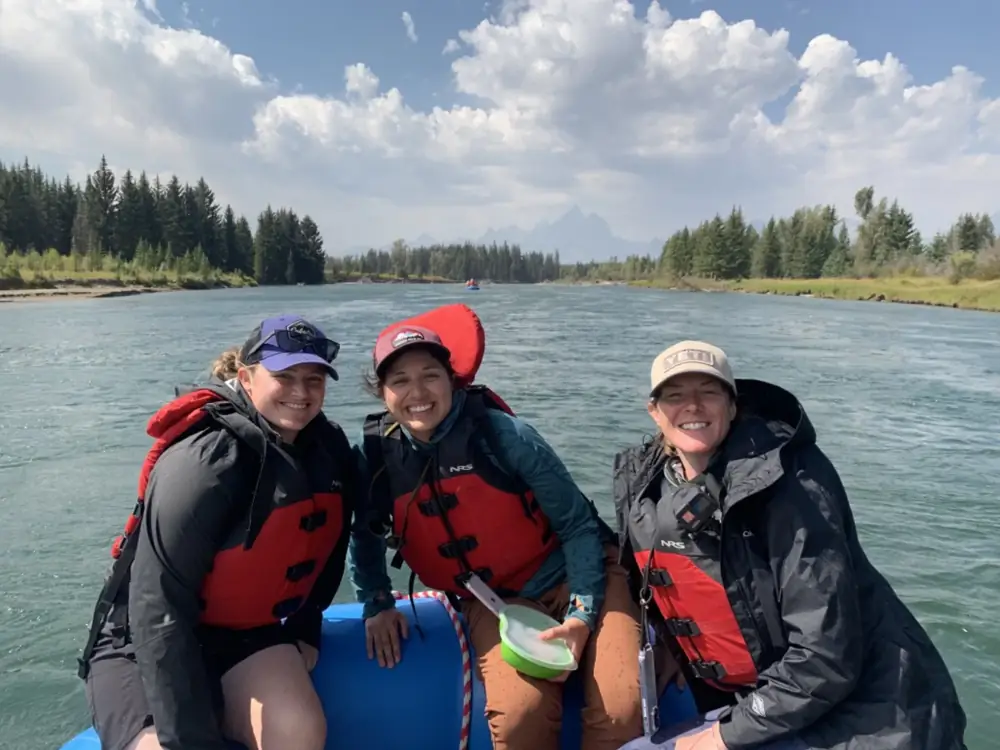
Upper Snake in GTNPMeasures the Snake through Grand Teton National Park, including flows from Spread Creek, Buffalo Fork, and Ditch Creek below the Moran gauge. The most accurate gauge for the Pacific Creek to Deadman’s, Deadman’s to Moose, and Moose to Wilson stretches.
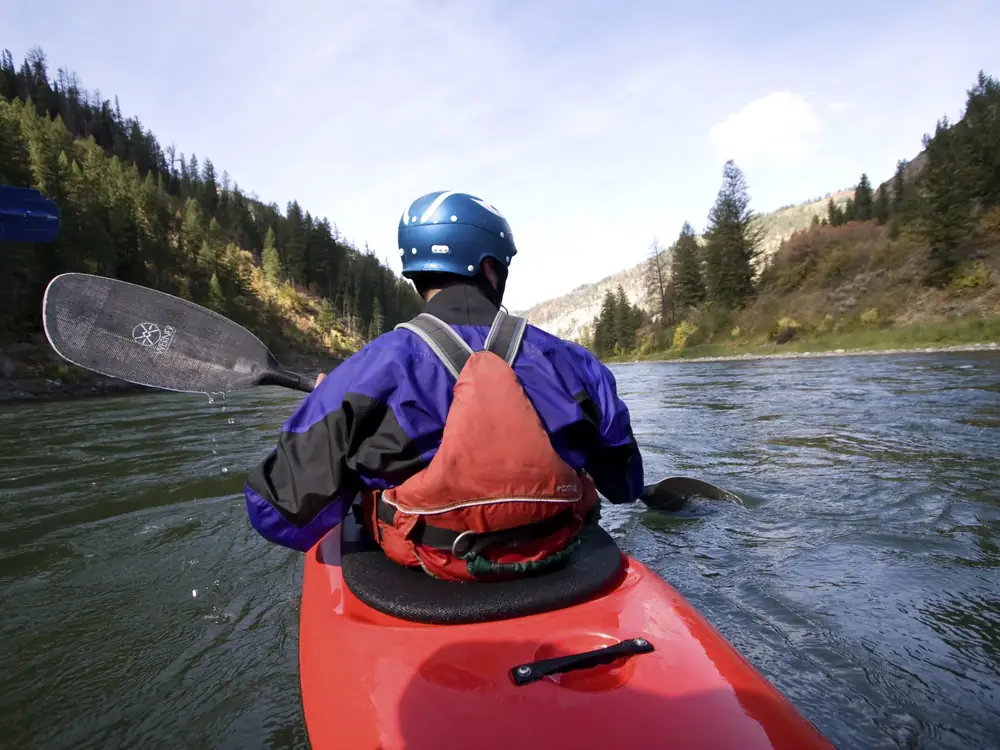
Snake River Above Reservoir Near Alpine, WY
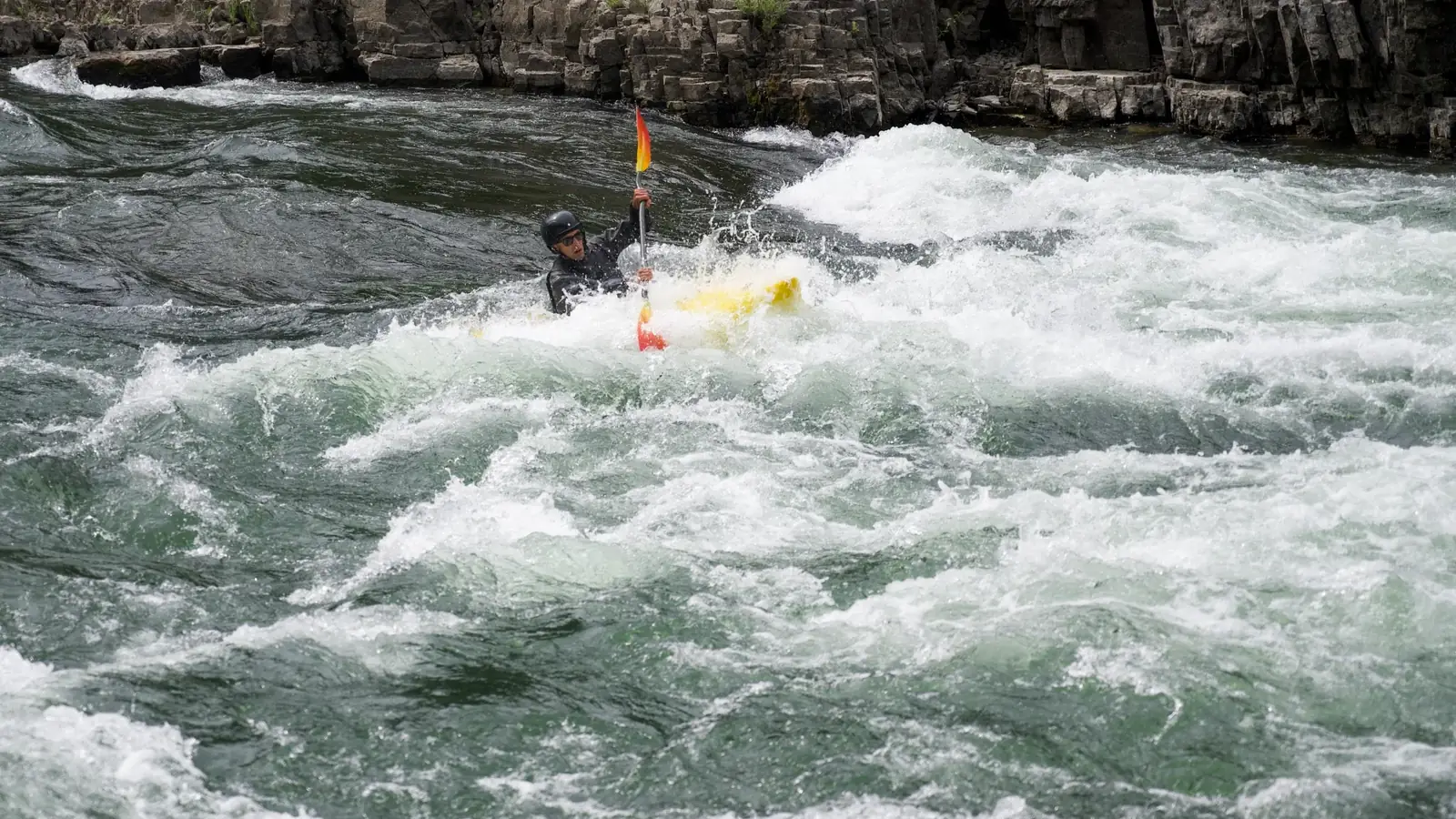
Lower Snake CanyonThe gauge for the Alpine Canyon run, right in the middle of it and just upstream of Big Kahuna and Lunch Counter. When people ask “What’s the canyon running?” this is the number they want. Winter flows drop to ~1,200 cfs and it’s still fun, good-water-year runoff can top 20,000 cfs, building huge waves, a few formidable holes, and strong whirlpools – great for experienced kayakers and rafters. Ideal range is 5,000-12,000 cfs, with typical mid-summer flows around 4,000-7,000.
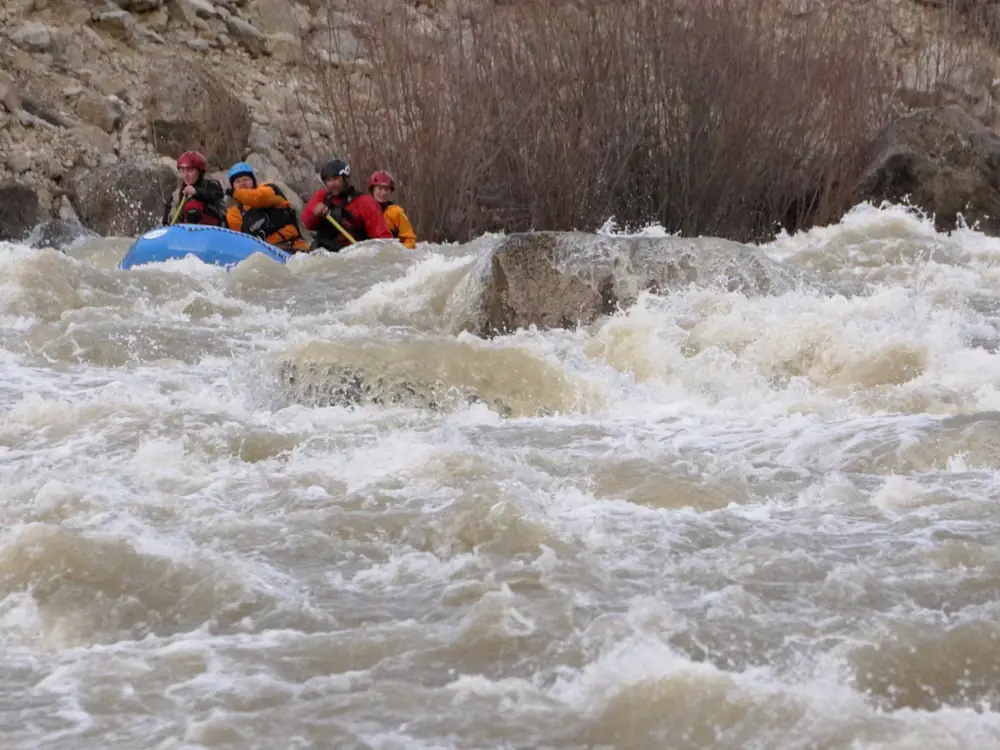
Gros Ventre @ Bridge: Call the Shop
Upper Gros VentreThe Gros Ventre below Slide Lake holds the best solid Class IV whitewater close to town, running late April into late June or even July in a good year. The moves are fairly straightforward but the rocks are sharp. The painted foot gauge at the Slide Lake outlet is the best-known reference: at zero it’s a bony but possible run, improving as flows rise; at 3.5 feet and up, the whitewater is nearly continuous for the full three miles.
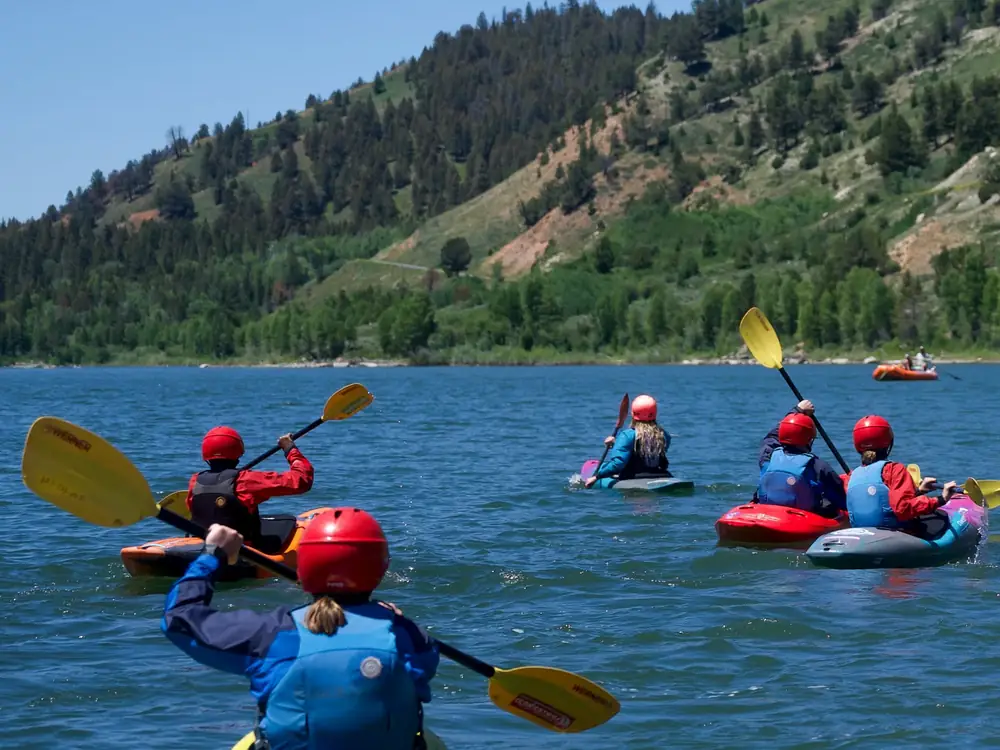
Gros Ventre @ Kelly
Lower Gros VentreMeasures the Gros Ventre near Kelly, downstream of the whitewater stretch – the actual USGS gauge for that section. Correlation with the painted Slide Lake gauge varies, but it shows the trend. Note: floating below the GTNP park boundary is currently illegal.
Conservation & Stewardship
We believe those who love and use these rivers have a responsibility to protect them. Rendezvous River Sports is BEST Certified for four decades of environmental stewardship – Clean Drain Dry, Leave No Trace, Play Clean Go, and 1% for the Planet.

Explore More
Continue Your ResearchThe River Report provides current conditions, but our comprehensive Area Guide offers detailed information on specific destinations, rapids, access points, and everything else you need to plan successful paddle adventures.

Frequently Asked Questions
Before You GoApril through late July, when conditions move most, we update our best-water notes more regularly. The gauge links above are USGS data refreshed hourly. For the most current read and personal advice, call the shop at(307) 733-2471– our staff checks conditions daily.
Cubic feet per second – literally how much water passes a point each second. Higher numbers mean more water, faster current, bigger waves, and generally harder conditions. But the same CFS behaves differently on different rivers depending on channel width, gradient, and obstacles, which is why our interpretation matters: we translate specific flows into what they mean for specific rivers and craft.
Yes – water temperature lags well behind air. Even in July, Snake River water often sits in the 50s°F because it comes from deep, cold Jackson Lake and snowmelt tributaries. Ask us whether a wetsuit or drysuit makes sense for your trip and craft.
Sometimes. It depends on the river, your skills, and your craft. Flows above or below the usual range can still be paddleable for experienced boaters but wrong for beginners, or may call for a different craft. Never judge safety from gauge numbers alone – Call (307) 733-2471 for an honest assessment.
Because numbers don’t tell the whole story. We paddle these rivers almost daily in season, know how each rapid changes with level, which craft work best at current flows, and have just-off-the-water reports from our guides. A five-minute call can save you a wasted drive, a dangerous situation, or a missed window on a better option.
The Snake River always has something fun – that’s the advantage of having a big river in the valley. March through November, there’s whitewater to run somewhere.