
Jackson Hole Lake Paddling
Alpine & Wilderness WatersDiscover Lake Adventures in Spectacular Settings
Mountain and wilderness lakes, from a paddler’s seatThe region’s lakes deliver spectacular scenery, excellent wildlife viewing, and quiet, meditative water – from beginner-friendly day paddles to multi-day wilderness expeditions. This section covers the lakes worth knowing across Grand Teton National Park, Yellowstone, and the Gros Ventre, with access, permits, timing, and honest notes on what each requires.
Conditions vary – mountain lakes can turn rough as fast as they turn glassy. Wind is the main variable. Paddle in the morning whenever possible: you’ll get the calmest water, the best wildlife activity, and the best light.
Planning Your Lake Paddle
Before You Launch
When to go
July through September brings the warmest water and most stable weather.
In Grand Teton, July-August are prime but busiest; early July and September balance good conditions with thinner crowds.
On Yellowstone Lake, August is warmest and busiest, late June–July offers fewer people (colder water, more afternoon storms), and September can be superb but weather turns variable, with early snow possible.
Across all lakes, mornings beat afternoons – wind typically builds after midday.
Permits
Day paddling with your own or rented gear requires a park entry permit plus a boat permit sticker in Grand Teton. Overnight backcountry camping requires permits arranged in advance.
As the only authorized kayaking concessioner in Grand Teton, we hold permits for specific, kayak-access-only campsites on Jackson Lake – the basis for our overnight expeditions.
Yellowstone requires its own boating permit, and its backcountry permits are limited and highly sought.
Skill and exposure
Big, cold, high-elevation lakes deserve respect. Yellowstone Lake sits at 7,733 feet, where cold water, distance from help, and afternoon wind and waves make basic skills genuinely important.
Day tours stick to sheltered shoreline, while expeditions call for prior experience. Smaller lakes like Slide, String, and Leigh are far more forgiving.
Wildlife
These shorelines are among the best wildlife viewing anywhere.
In Grand Teton, moose feed in willow bays (morning and evening are prime), bald eagles and osprey nest along the shore, and otters and beavers are common, with the occasional bear on a distant slope.
Yellowstone Lake country holds some of North America’s densest populations of grizzly bears, wolves, and bison. Expect bison, elk, and waterfowl, cutthroat trout spawning in tributaries, and eagles and osprey overhead.
A quiet boat gets you closer than most hikers – always at a respectful distance.
Jackson Lake
Overnight Expeditions Only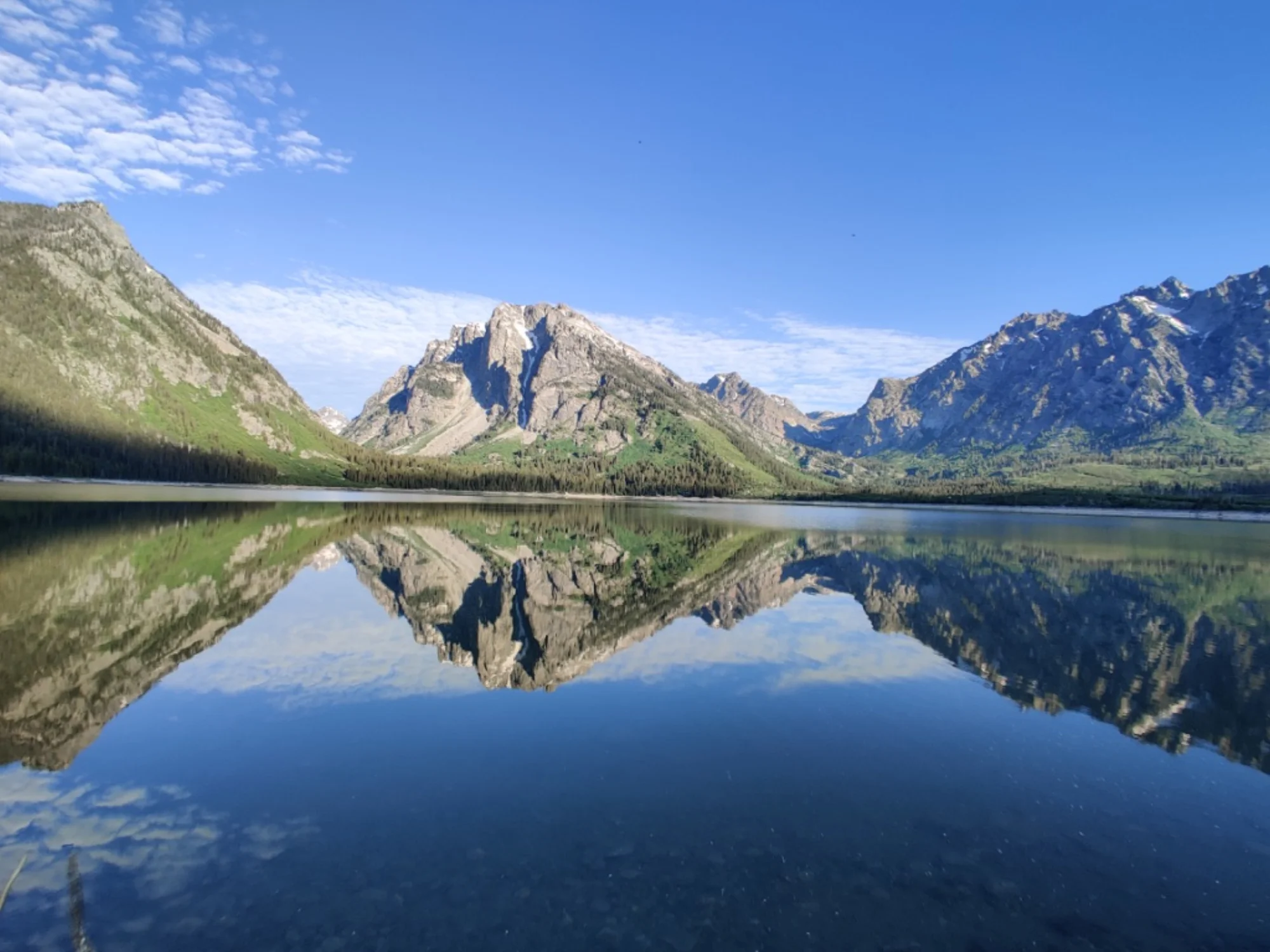
Description
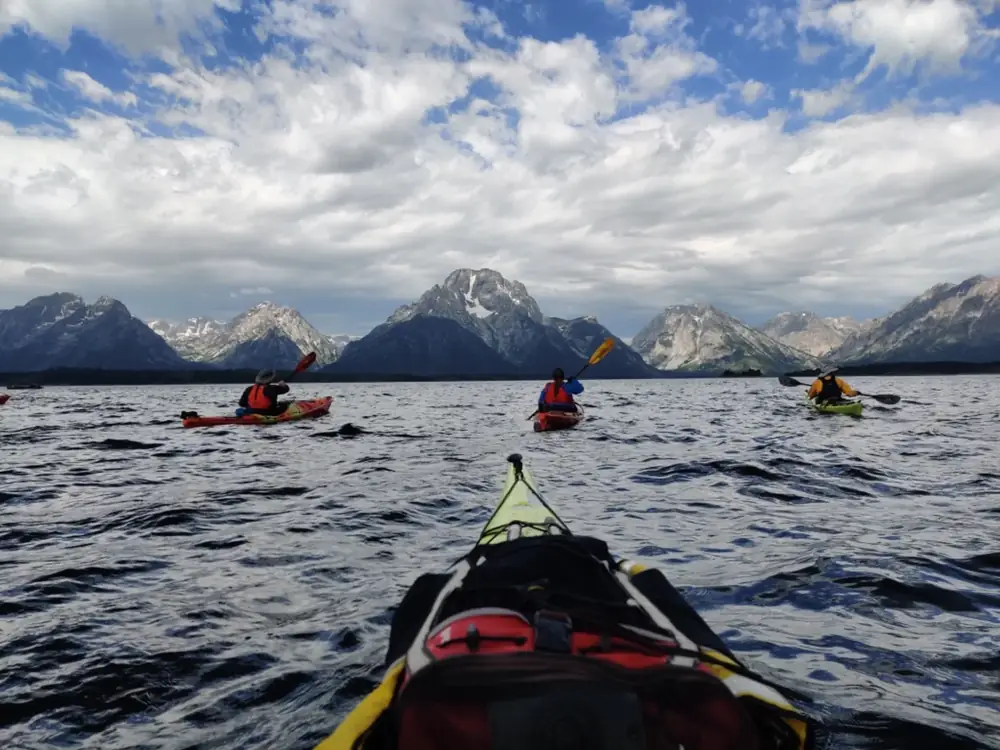
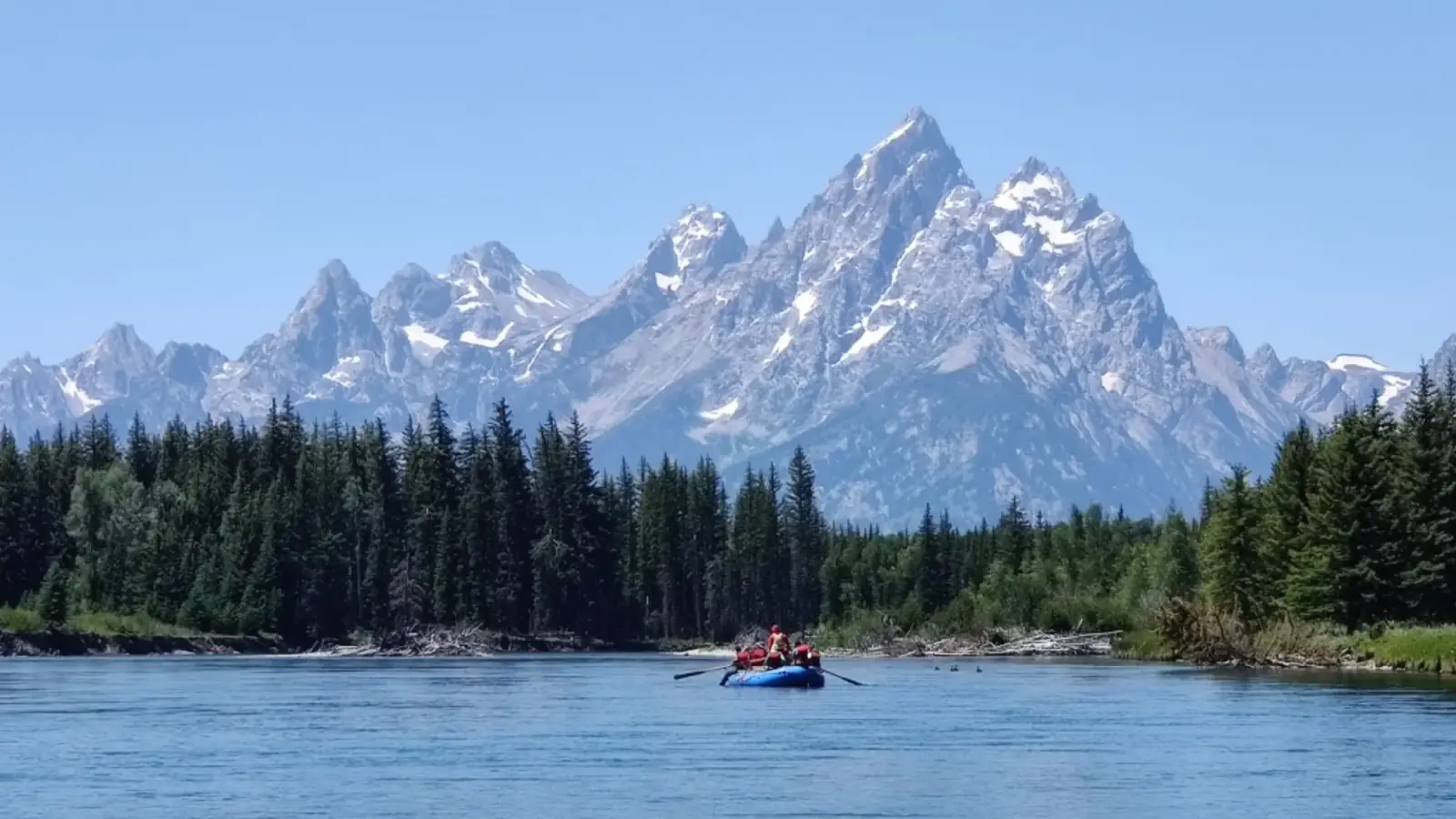
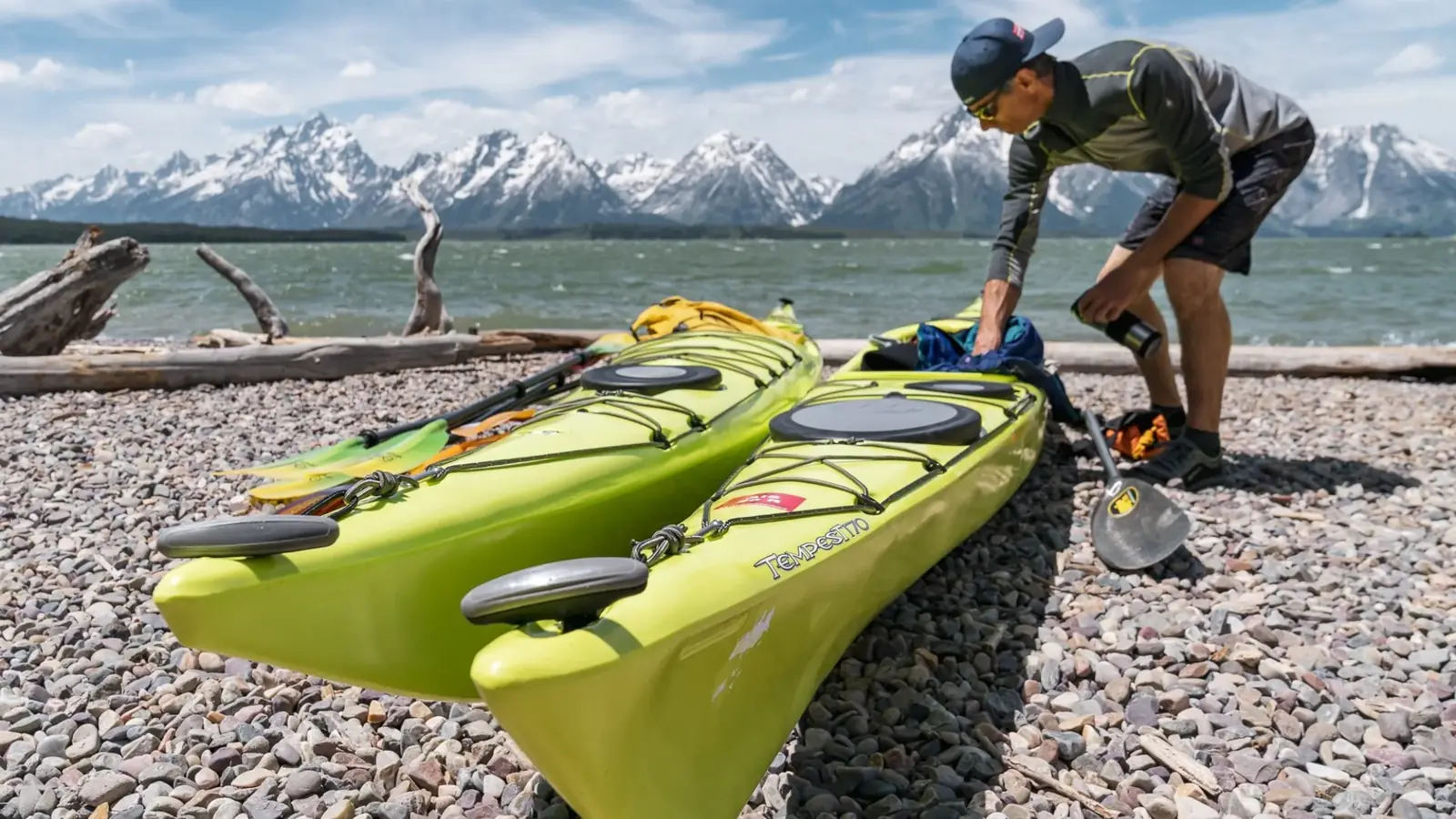
Jackson Lake lies entirely within Grand Teton National Park, with the Tetons rising straight from the western shore. At 25,000+ acres, this massive glacial lake is the setting for our 2-4 day overnight expeditions, reaching remote islands and shorelines accessible only by paddle craft. Because it’s within the park, independent day paddling is possible with the proper permit, but the private, boat-in campsites are reachable only through our concession.
Access
A great put-in for avoiding crowds is Spalding Bay; other accesses are Leeks Marina, Colter Bay, and Signal Mountain. To reach Spalding Bay boat ramp: drive north from Jackson on Hwy 191/89 and turn left at Moose Junction (stop at the visitor center for a permit). Enter the park and continue north on Teton Park Road; shortly after North Jenny Lake Junction, watch for a left onto an unmarked dirt road to the ramp.
Jenny Lake
Self-guided day paddle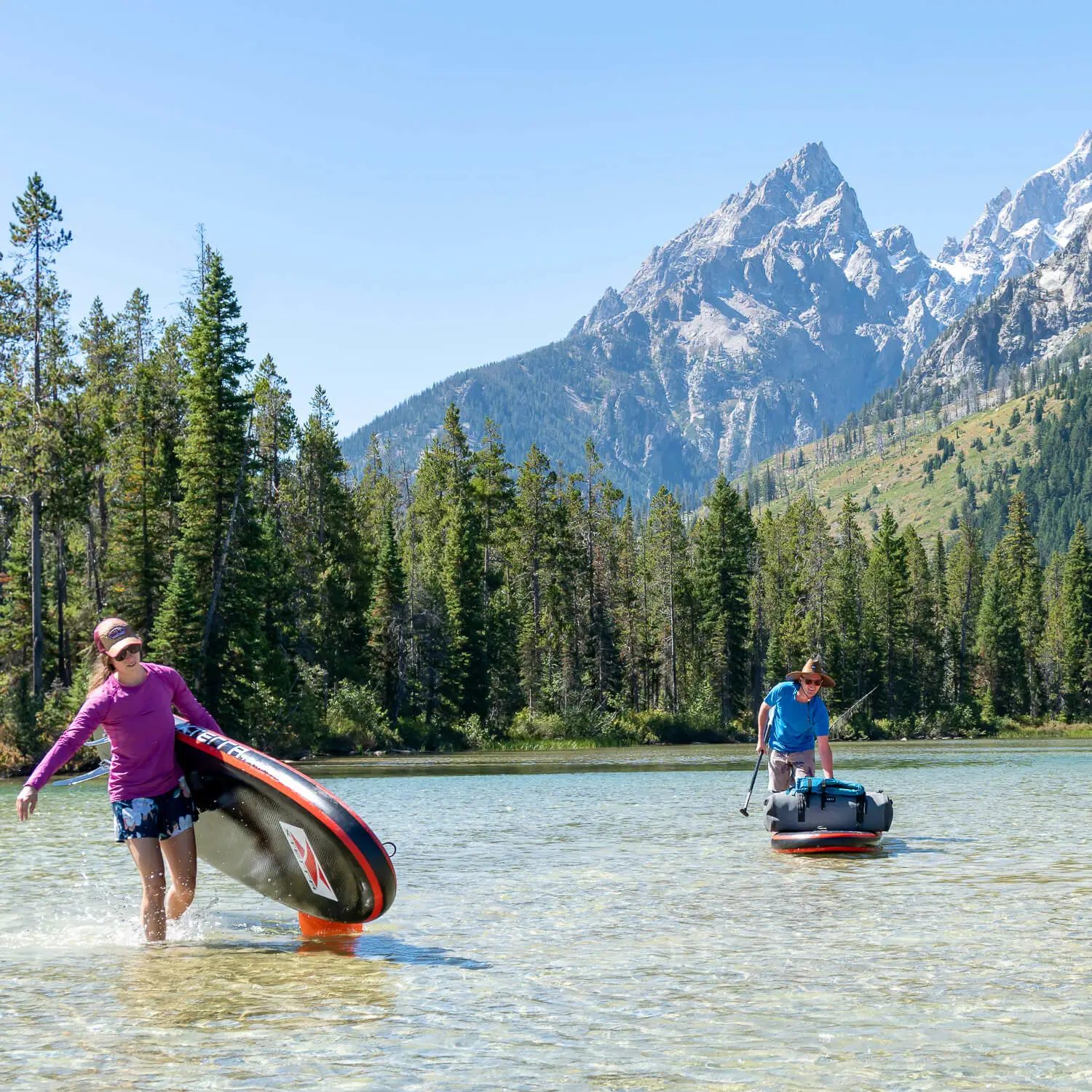
Description
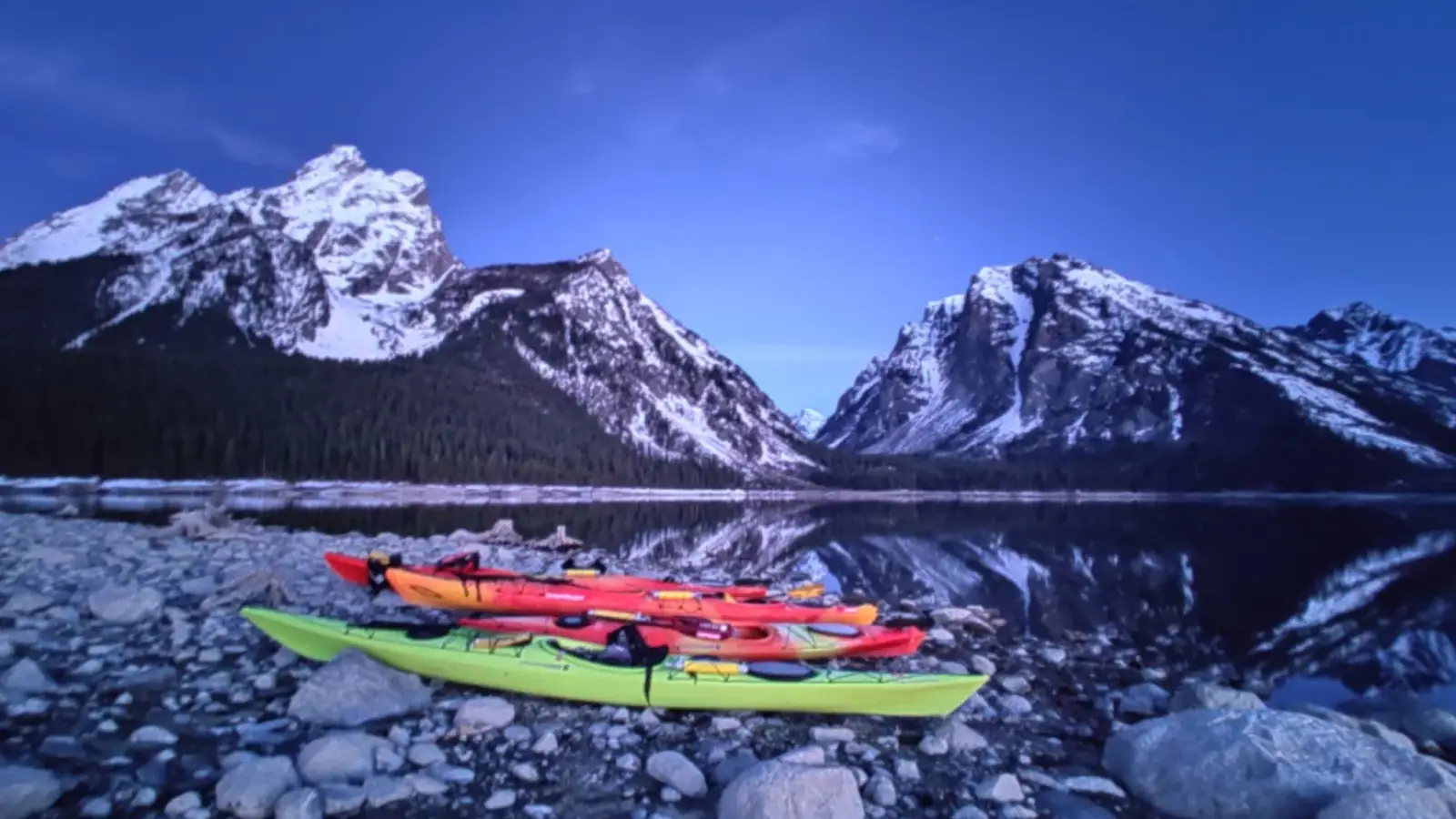
South of String Lake, Jenny Lake sits beneath the abrupt rise of the Grand and Teewinot. Paddling its placid, deep water makes an excellent afternoon tour. Small motors are allowed, but kayaks and canoes are more common. Boat permit stickers are required; there’s no backcountry camping.
Access
Drive north from the Moose visitor center and turn left toward Lupine Meadows. The road crosses a small bridge, then divides – turn right onto the rough dirt road down to the lake.
String to Leigh Lake
Self-guided day or overnight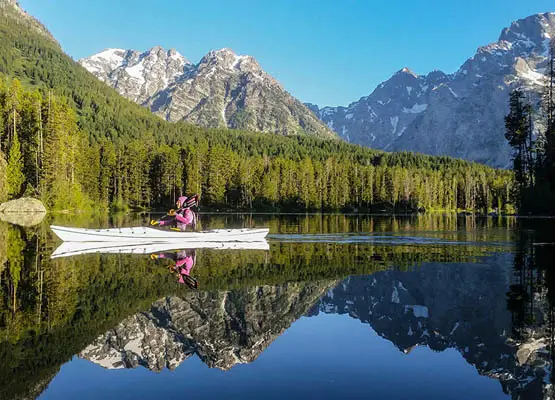
Description
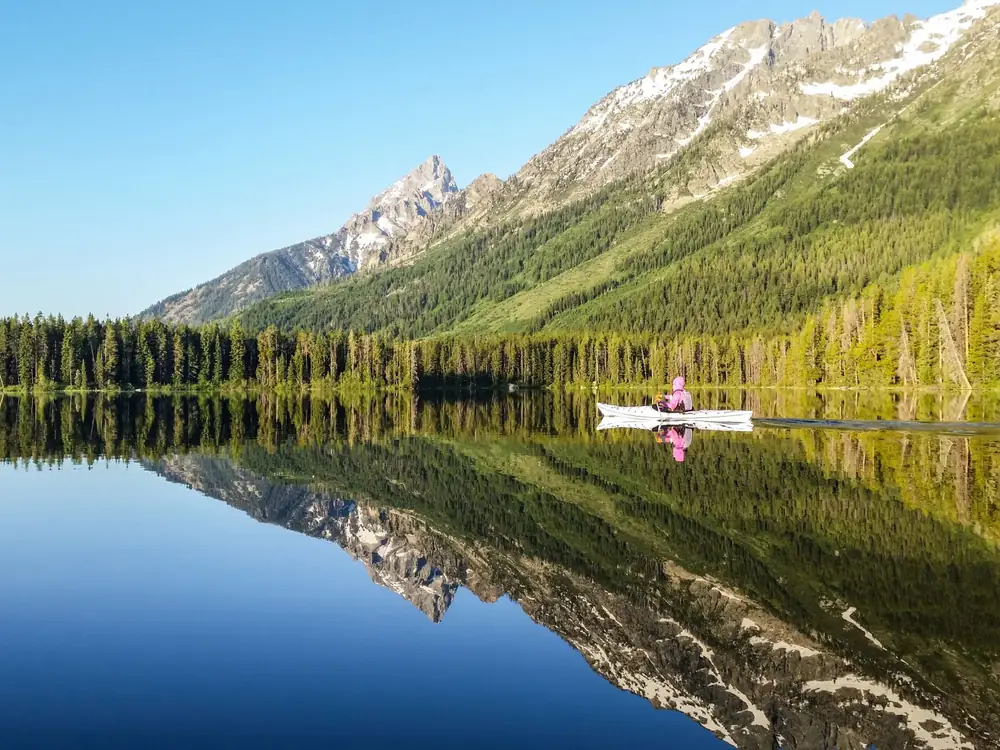
Just south of Jackson Lake, String and Leigh Lakes make a fine backcountry tour. No motors are allowed on either, and Leigh has no road access – reaching it means a short paddle to the north end of String, then a short portage. Once on Leigh, spectacular campsites await (permits required).
Access
Drive north from the Moose visitor center and turn left at North Jenny Lake Junction; follow signs to the String Lake boat access.
Slide Lake
Day trips available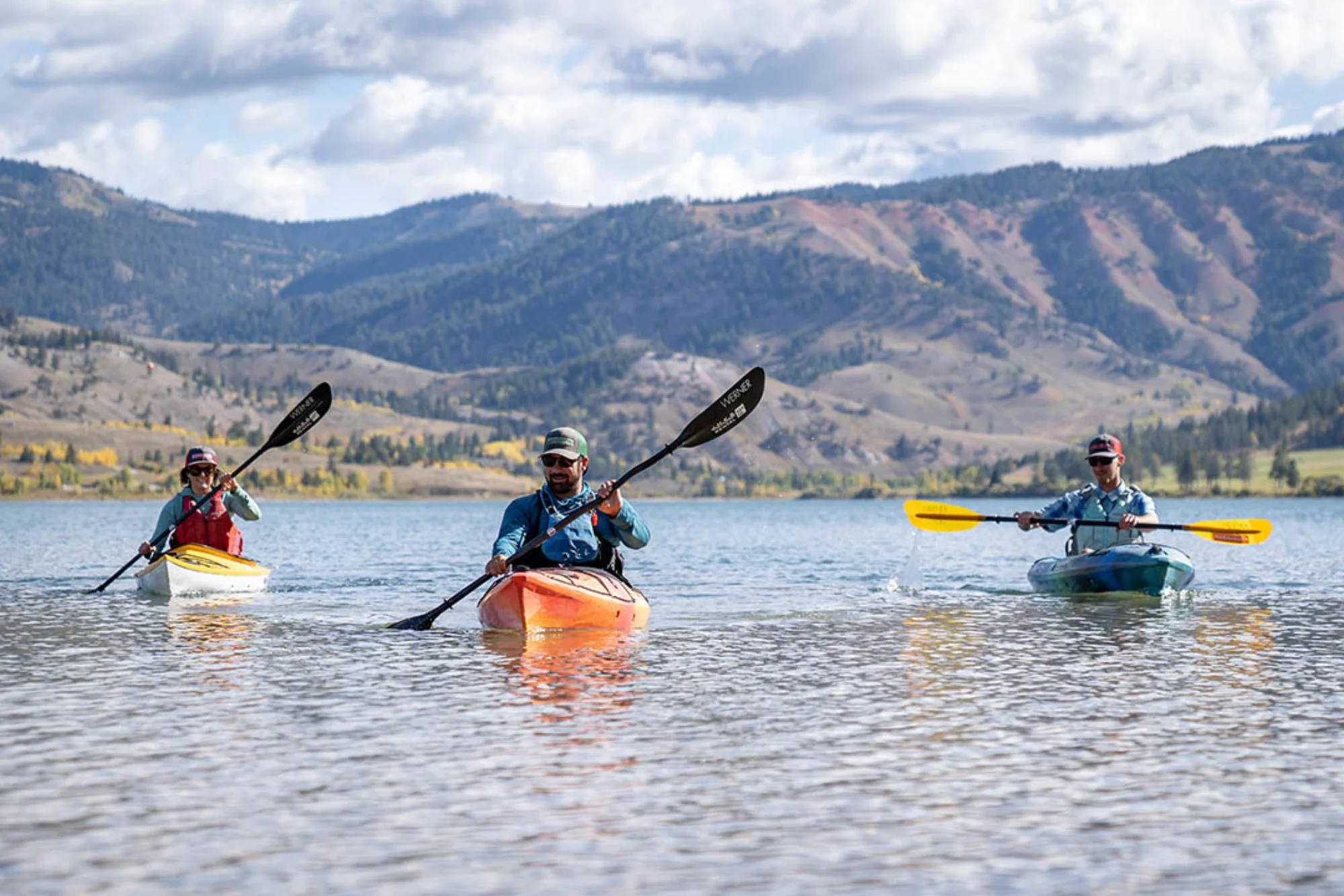
Description
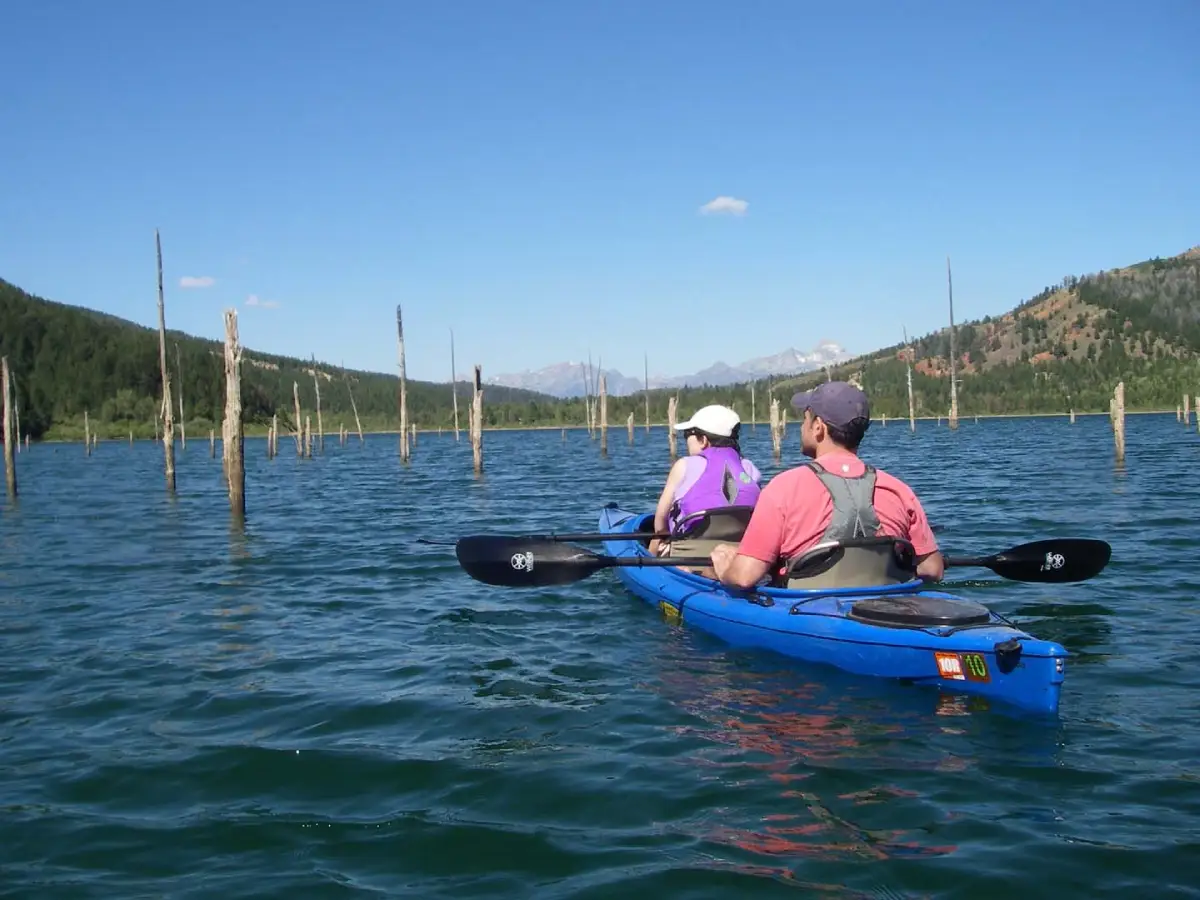
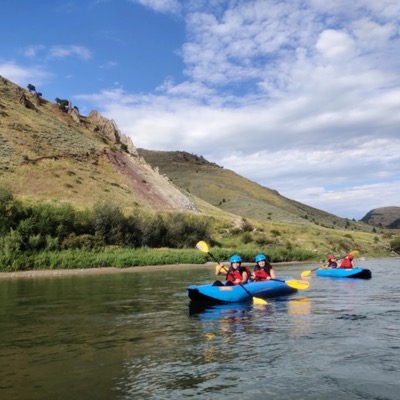
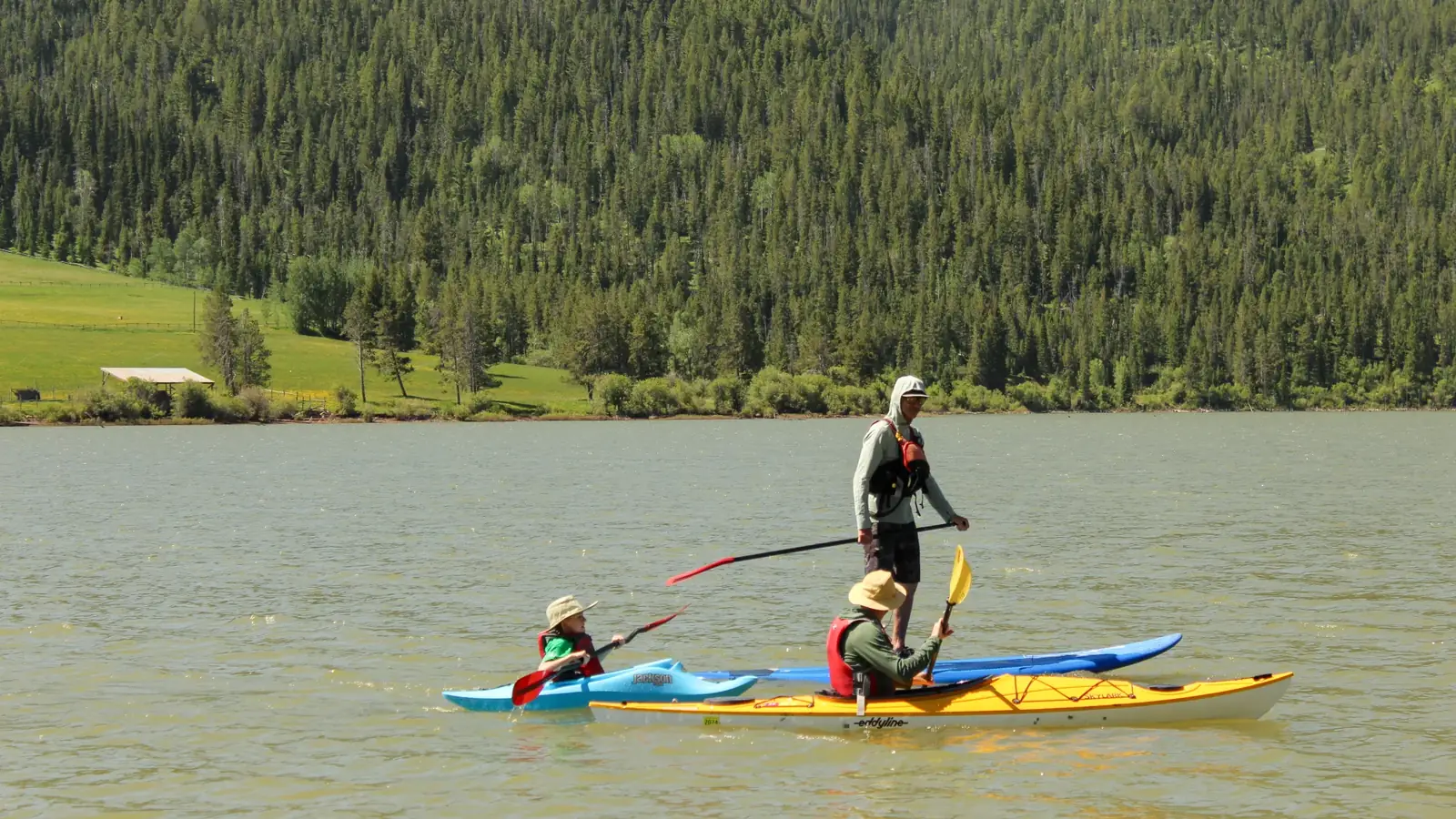
Slide Lake sits in the Gros Ventre Wilderness, a striking alpine lake formed by the massive 1925 Gros Ventre landslide. Paddle past dramatic slide debris and watch for moose in the willows and eagles working the water. Conditions are usually suitable for beginners, which makes this our primary day-trip lake.
Access
From Jackson, head north on US 26/89/191 toward Grand Teton. After ~7 miles, turn right at the Gros Ventre Junction roundabout onto Gros Ventre Road. Follow it east along the river through Kelly; just past Kelly, take the signed right to stay on Gros Ventre Road as it climbs into the valley. Continue ~6 miles to Atherton Creek Campground on Lower Slide Lake.
Yellowstone Lake
Day Trips Available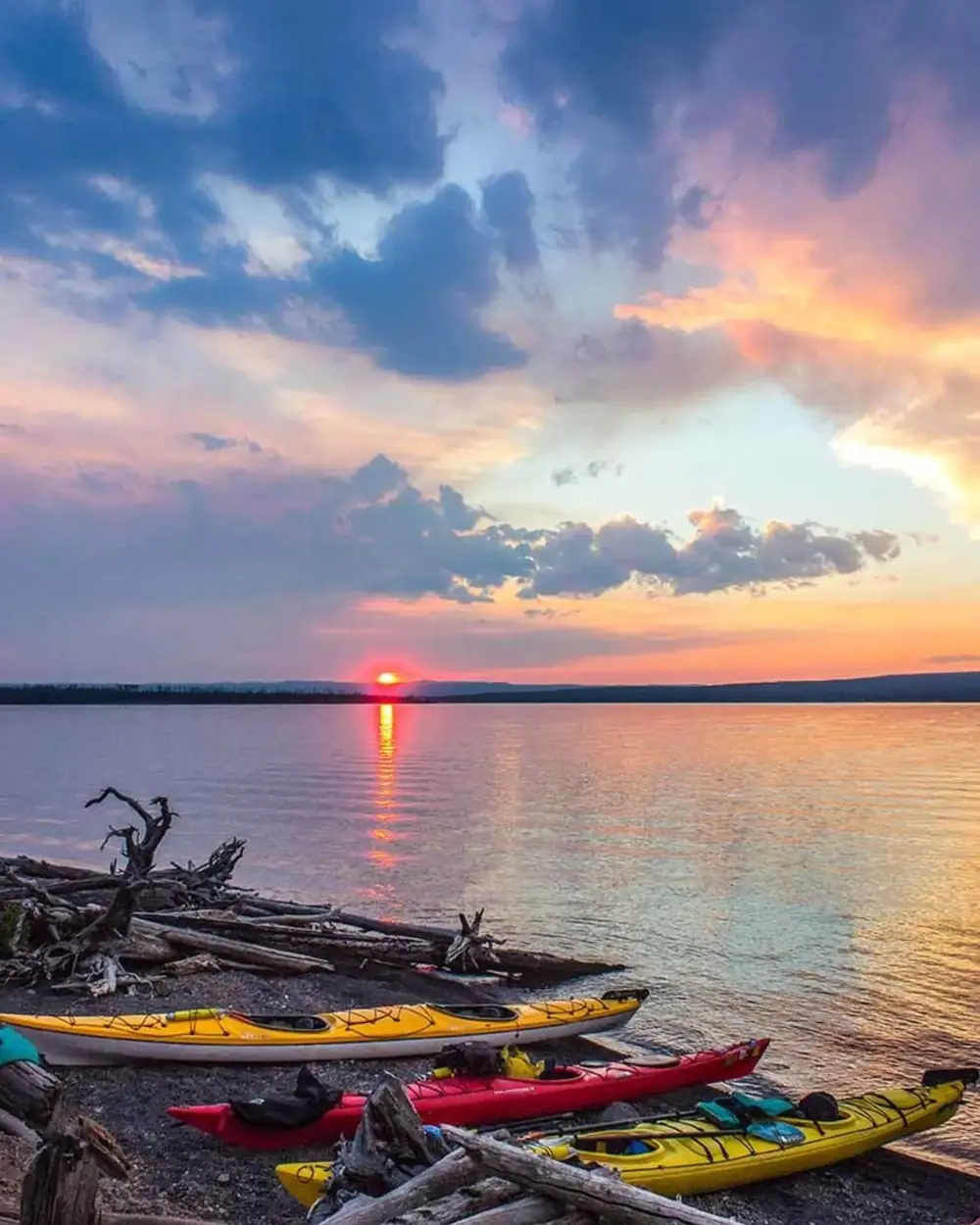
Description
At 7,733 feet, Yellowstone Lake is the largest high-elevation lake in North America – 132 square miles with 136 miles of shoreline. Paddle past steaming geothermal vents along the shore, crystal-clear water, and views of the Absaroka Mountains. Its size, elevation, cold water, and afternoon wind make it a serious body of water; day tours stay near the sheltered West Shore, while longer trips call for experience.
Access
Head north from Jackson on US 26/89/191 through Grand Teton and the John D. Rockefeller, Jr. Memorial Parkway to Yellowstone’s South Entrance. Continue north on the South Entrance Road past Lewis Lake, over the Continental Divide, and down to the West Thumb at Grant Village.
Lewis & Shoshone Lakes
Day & Overnight Options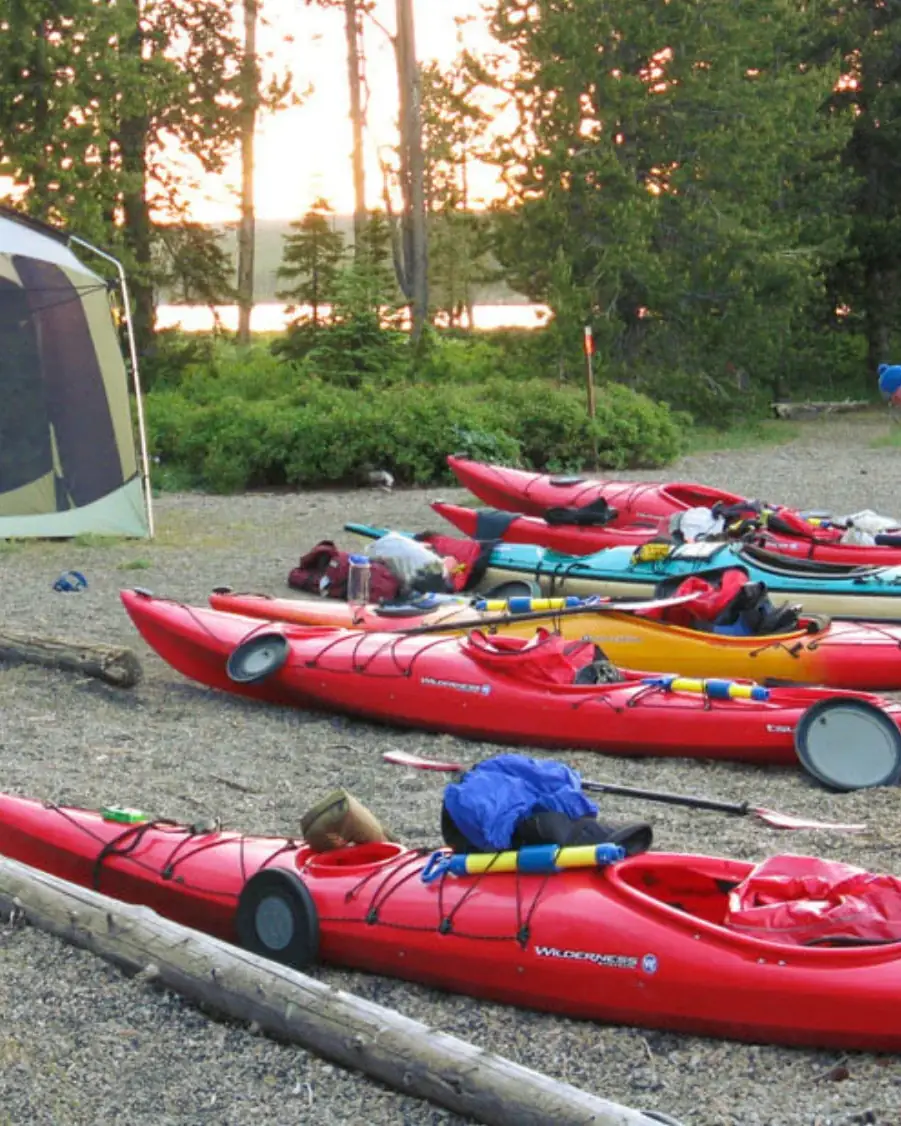
Description
Lewis Lake opens the way to remote Shoshone Lake and the Shoshone Geyser Basin, the largest backcountry geyser basin in Yellowstone. Day trips explore Lewis, overnight expeditions continue to Shoshone via the Lewis River Channel. There’s no road to Shoshone – you earn it by paddle.
Access
Follow the route to Yellowstone’s South Entrance (above), then continue ~10 miles on the South Entrance Road to the Lewis Lake boat launch at the south end, beside the campground and picnic area. This is the put-in for both lakes.
Reaching Shoshone from the launch
Canoes and kayaks reach Shoshone via Lewis Lake and the Lewis River Channel, which enters at Lewis Lake’s north end. Follow the western shoreline – the hills screen you from the wind that builds most days – then head upstream into the channel. It runs about three miles and is the only stretch of river in all of Yellowstone open to boats. The final section grows too shallow to paddle, you’ll wade and line your boat upstream through cold, clear water. Wear footwear you can wade in and expect cold legs. It’s part of the experience – the channel itself, with glassy water, lily pads, otters, and waterfowl, is a highlight, not an obstacle.
Other Tours
There’s more water around the valley. Also in Grand Teton are Two Ocean and Emma Matilda Lakes. To the east in the Gros Ventre Mountains lie Upper and Lower Slide. Palisades Reservoir and the Snake River below Palisades Dam offer touring as well. Ask the shop about any of these – we paddle them.